
OSLC Scientists have earned their Ph.D. in either clinical, developmental, counseling, quantitative, or school psychology. Each publishes extensively in scientific literature, and collectively OSLC scientists have produced more than 1,000 publications. OSLC scientists regularly present research results at international, national, regional, and/or state conferences.
Choose a Scientist:
Jacqueline Bruce, Ph.D.

Research Scientist
Rohanna Buchanan, Ph.D.

Senior Research Scientist
Patricia Chamberlain, Ph.D.

Senior Research Scientist
David Kerr, Ph.D.

Senior Research Scientist
Michael R. McCart, Ph.D.

Senior Research Scientist
Katherine C. Pears, Ph.D.

Senior Research Scientist
Sonja K. Schoenwald, Ph.D.

Senior Research Scientist
Stacey S. Tiberio, Ph.D.

Senior Research Scientist
Miriam Clark, Ph.D.

Early Career Scientist
Lew Bank, Ph.D.

Affiliated Scientist
David S. DeGarmo, Ph.D.

Affiliated Scientist
J. Mark Eddy, Ph.D.

Affiliated Scientist
Alan Feingold, Ph.D.

Affiliated Scientist
Philip Fisher, Ph.D.

Affiliated Scientist
Hyoun K. Kim, Ph.D.

Affiliated Scientist
John Landsverk, Ph.D.

Affiliated Scientist
Leslie Leve, Ph.D.

Affiliated Scientist
Charles Martinez Jr., Ph.D.

Affiliated Scientist
Kristyn Zajac, Ph.D.

Affiliated Scientist
Deborah Capaldi, Ph.D.
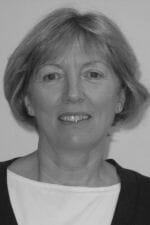
Emeritus Scientist
Marion S. Forgatch, Ph.D.

Emeritus Scientist
Beverly Fagot, Ph.D.

In Memoriam
Tom Dishion, Ph.D.

In Memoriam
Gerald R. Patterson, Ph.D.

In Memoriam
John Reid, Ph.D.

In Memoriam